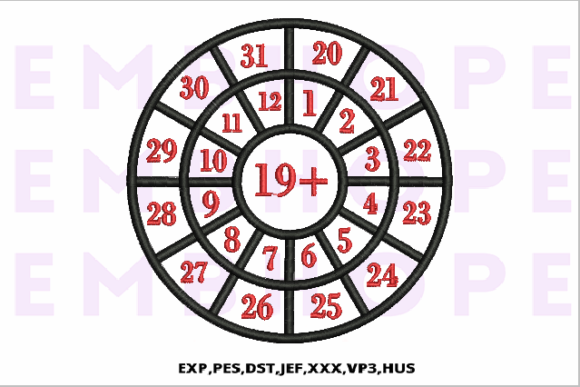
Reviewing Addition Wheel 19 for Personalized Gifts
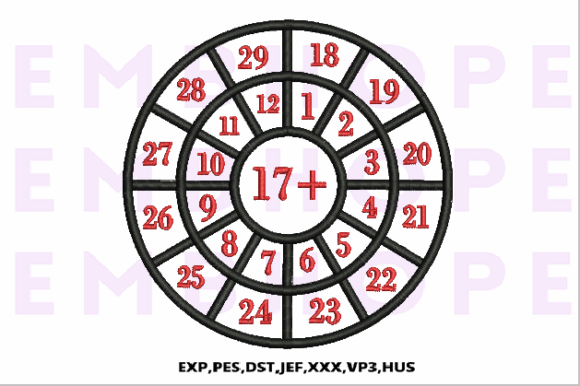
As an embroidery designer who spends countless hours testing files before they ever reach a customer, I approach every new design with a mix of excitement and skepticism. Today, I am putting Addition Wheel 19 through its paces. While the product description highlights its educational utility for classrooms, my focus is different. I am looking at this from the perspective of a small business owner preparing for a busy season of personalized gifts. Can a math-themed wheel translate into a meaningful keepsake? Is it viable for Etsy listings, custom orders, or boutique shop inventory?
Here is my honest review of how Addition Wheel 19 performs as a machine embroidery design when applied to real-world gift products.
First Impressions: Charm Meets Functionality
The first thing that strikes me about Addition Wheel 19 is its inherent playfulness. It is not just a static graphic; the "wheel" aspect suggests movement and interaction, which adds a layer of tactile interest to any finished piece. The mood is undeniably bright and cheery. For a designer looking to create items that evoke warmth, this design hits the sweet spot between educational and decorative.
In terms of detail level, the design feels balanced. It avoids being overly cluttered, which is crucial for maintaining clarity in smaller formats. When I look at the visual appeal, it reads as handmade and thoughtful. It does not feel like a generic clip-art stamp but rather a curated element suitable for a nursery, a classroom, or a child’s study space. The emotional appeal lies in its simplicity—it celebrates learning in a way that feels encouraging rather than rigid. This makes it incredibly versatile for personalized gift scenarios where the buyer wants something unique but not overwhelming.
Product Applications: Beyond the Classroom
While the source material mentions classroom use, the true potential of Addition Wheel 19 shines in the realm of personal gifting. Here is how I see this embroidery file performing across various product categories:
- Baby Embryoidery and Nursery Decor: Imagine this design stitched onto a soft muslin swaddle or a felt activity board. The circular shape works beautifully on round objects like rattle handles or mobile centers. It serves as a gentle introduction to numbers for little ones.
- Kitchen Towels and Aprons: For a baby shower or a housewarming gift, an embroidered towel featuring this design adds a touch of whimsy. It pairs well with pastel thread colors to create a cohesive aesthetic that appeals to modern parents.
- Pillow Covers and Blanket Embroidery: Placed in the corner of a crib sheet or on a throw pillow, the design acts as a charming accent. It is substantial enough to be seen but not so large that it dominates the fabric texture.
- Tote Bags and Custom Totes: For older children or students, a canvas tote bag with Addition Wheel 19 is both functional and fun. It reinforces the idea that school supplies can be stylish and personal.
- Wedding Keepsakes and Family Gifts: While less traditional, this design could work for a teacher’s wedding gift or a family reunion item focused on education. It speaks to values of growth and learning.
For the Etsy seller or small shop product creator, these applications offer diverse listing opportunities. You are not limited to one niche; you can cross-promote this design across baby, home decor, and back-to-school categories.
Strategic Considerations and Fabric Constraints
No design is perfect for every surface. As a professional, I must advise caution in specific scenarios. The effectiveness of Addition Wheel 19 depends heavily on the substrate you choose.
Avoid using this design on highly textured fabrics such as thick terry cloth towels unless you are using a heavy-duty stabilizer and accepting a softer finish. The fine details may get lost in the loops of the fabric. Similarly, stretchy baby clothes require a stable knit stabilizer to prevent puckering, which can distort the circular geometry of the wheel.
Dark fabrics present another challenge. If the design relies on light-colored threads for contrast, stitching on dark navy or black cotton without a backing layer will result in poor visibility. Always compare light and dark fabric mockups before finalizing your product line. Furthermore, curved surfaces like hats or rounded bottle holders can distort the wheel shape if the hoop tension is not perfectly calibrated.
Finally, consider the end-user environment. Products that need frequent washing, such as burp cloths or dish towels, should be stitched with durable threads and proper finishing techniques to ensure the stitch density holds up over time.
Impact on Giftability and Perceived Value
When evaluating a digital file for commercial use, we must ask: Does this increase the perceived value of the handmade product? In my experience, Addition Wheel 19 does exactly that. It transforms a basic commodity—like a plain pillowcase—into a curated gift item.
This design fosters an emotional connection by associating the product with positive concepts like learning, childhood innocence, and academic achievement. For the buyer, this translates to trust. They are not just buying an embroidered square; they are buying a sentiment. High-quality execution of this design enhances product photography opportunities as well. The clean lines and cheerful colors photograph well, leading to higher engagement rates on social media and better conversion rates for online stores.
Practical Embroidery Notes for Makers
To ensure success with Addition Wheel 19, follow these practical steps before running production orders:
- Test on Scrap Fabric: Always run a test stitch on the exact fabric type you plan to sell. This reveals how the thread colors interact with the material.
- Check Hoop Size: Verify the required hoop size matches your machine’s capabilities and the dimensions of your chosen product.
- Review Stitch Density: Ensure the density is appropriate for the fabric weight. Too dense, and the fabric may pucker; too sparse, and the design may look thin.
- Use Proper Stabilizer: Select a cut-away or tear-away stabilizer based on the fabric’s stability. This is critical for maintaining the integrity of the wheel shape.
- Confirm Commercial Licensing: Before selling finished goods, double-check the commercial embroidery license terms included with the digital embroidery file. Different vendors have different rules regarding resale limits.
- Create Printable Mockups: Use digital mockups to visualize the design on your products. This helps in marketing without needing to physically produce every variant immediately.
In conclusion, Addition Wheel 19 is a versatile, charming addition to any designer’s library. Its ability to bridge the gap between educational tools and heartfelt gifts makes it a strong candidate for custom embroidery projects. By paying attention to fabric choice and technical execution, makers can create high-quality, emotionally resonant products that stand out in a crowded marketplace.